Why Did Munetaka Murakami Not Get the Contract He Wanted?
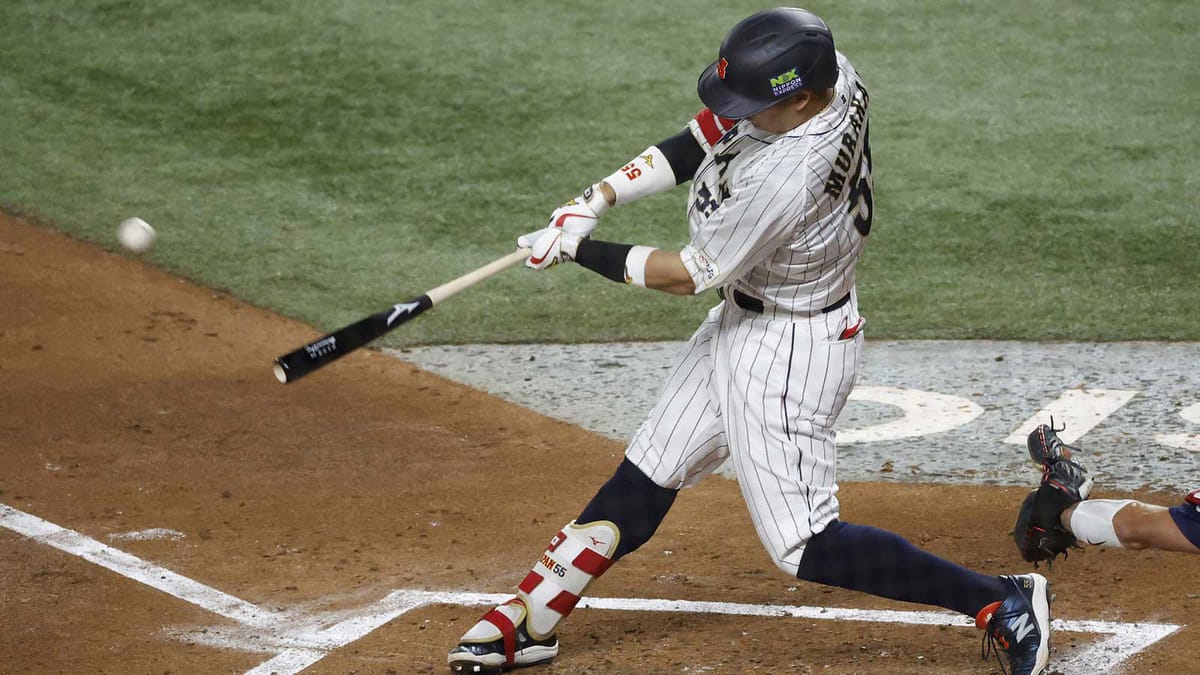
On December 21st, the White Sox signed Japanese slugger Munetaka Murakami to a 2 year, $34 million contract. “What’s the big deal?” you might ask. The big deal is that he was lined up to receive a lot more money than he received. ESPN.com predicted him to sign a 5 year, $80 million contract, and MLBTradeRumors.com projected him at 8 years, $180 million. I’ll be investigating this odd dilemma, and hopefully, by the end of this article, we will have a better understanding of what happened to Murakami’s market.
First, let me give you a little more background. Murakami was playing in the NPB (Nippon Professional Baseball) in Japan for the Tokyo Yakult Swallows. His best season in Japan was in 2022 where he hit 56 HRs and had 134 RBIs. Then, he asked to be posted (players playing in Japan have to be posted into MLB by Japanese teams, and they have 45 days to sign), and the team said yes. He was posted at 8:00 A.M. ET on November 8th, 2025, and he had until December 22, 2025, at 5 P.M. ET. It was reported that Murakami signed with the White Sox on December 21st, 2025, at 8:10 A.M ET by ESPN’s Jeff Passan. With that context, let’s look at what happened to Murakami’s market.
What happened was the result of several factors. First of all, maybe teams were interested in other players, and they were more interested in signing said players than Murakami, so they didn’t make him an offer.
Something that intrigued me was that ESPN’s Jeff Passan reported that Murakami DID have some long term offers from a few other clubs, but they were longer term deals with low AAV (average annual value). So part of why he didn’t sign a long term contract is because he wanted to bet on himself with a high AAV, short term contract. Keep in mind that Murakami isn’t even 26 yet, so he can re-enter the free agent market in his age 28 season, and hopefully demand a larger contract if he showed two years of good results.
Another reason for teams to be wary of Murakami is because of his strikeout percentage. In his last three seasons in the NPB (2023, 2024, and 2025), his average strikeout rate was 28.73%. That means he strikes out more than 1/4 of the time. The strikeout rate could become even worse with the pitchers he will face in MLB. One anonymous team official said: “Like, can he actually hit?”
His defense is also mildly concerning. Being 6’2, 213 lbs, he’s not the most agile guy. He is considered a third baseman, but many scouts consider him more of a first baseman/DH. Ken Rosenthal went on Foul Territory (a baseball YouTube channel) and said this: “He (Murakami) is mostly a DH-type player. He plays first, he plays third. But, from what I understand, what everyone is saying is, he is not a great defender.”
This tidbit is not necessarily related to Murakami’s market, but I did want to touch on what I think about this signing for the White Sox. I think that the White Sox are always going to be opportunistic in their signings, and if Murakami’s contract climbed a bit higher, I don’t think they would’ve signed him. Nevertheless, I think it was a great signing for them, and it gives White Sox fans something to look forward to in the 2026 season. I wouldn’t say that the White Sox are taking a flyer and hoping it works, but I do think that they really needed a bat who could play a little infield, and the White Sox know they are accepting some risk with this signing. I definitely think that this move could pay off, and that a lot of teams could regret not bidding on Murakami. I think it could play out well for the White Sox while also giving the White Sox fans someone to rally behind.
So what happened to Murakami’s market? The short answer is there were a lot of factors. The market cooled but the talent is real, and everyone, including me, is still rooting for him.
Thanks for reading!