Why Did Jake Bauers Leave the Brewers for the Red Sox in Free Agency?
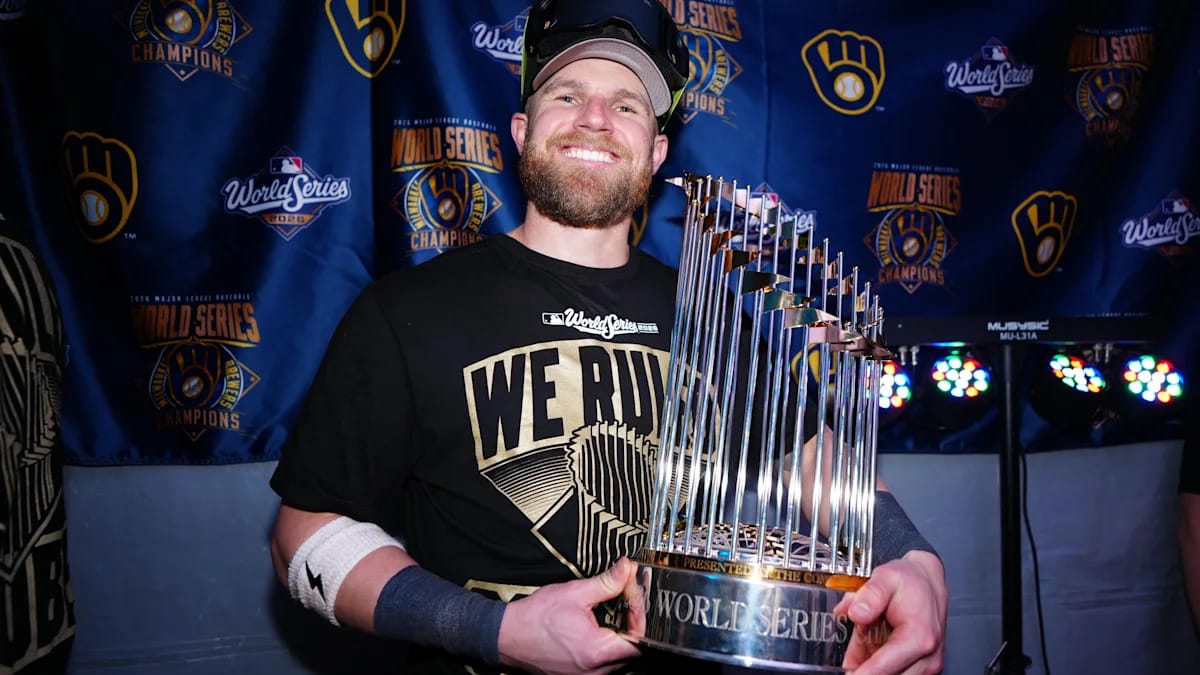
The Brewers handily won the World Series in 2026 (like I predicted they would). However, they had a few key players becoming free agents after the season. One of them was Jake Bauers, who ultimately left Milwaukee to play for the Boston Red Sox. But why? Why would a player leave the reigning World Series champions? In this article, I'll be answering that exact question. Let's get into it.
Jake Bauers recently signed with the Red Sox for a four-year, $58 million contract, turning down the qualifying offer that the Brewers had presented him in the process. As a side note, the Brewers will also receive a compensatory draft pick for losing Bauers after offering him a qualifying offer. But what effort did Milwaukee actually make to re-sign the NLCS MVP, if any?
Obviously, the Brewers offered him a qualifying offer worth $23.15 million over one year. Beyond that, though, it's unclear whether Milwaukee engaged in further negotiations. Some reports suggest that the Brewers were unwilling to make a longer commitment beyond two or three years.
So why the hesitation? Much of the Brewers' skepticism might have stemmed from Bauers' one breakout year. After all, this was his first year as a full-on superstar, and there's always a possibility that teams fall victim to recency bias when evaluating a player's value. This can show up especially in contract offers. The Brewers, though, tend to avoid this recency bias for the most part, instead banking on young players or proven veterans.
There's still one major point that I want to get into. While Jake Bauers' season signals a breakout, there's also the possibility that some of his production isn't entirely sustainable. See, while his overall numbers were impressive, his expected numbers tell a slightly different story. For example, his xwOBA (with the "x" standing for expected) was .371 in the regular season, compared to his actual wOBA of .389. Two more prominent examples are his batting average and slugging percentage, with both of his expected numbers being lower than his actual in-season results. This suggests he might've been getting lucky.
Adding to this theory, the Brewers are a very analytically driven organization, so I wouldn't be surprised if they picked up on some of this information and held back from making larger bids.
Overall, it was likely a combination of the qualifying offer, the Brewers' tendencies in contract negotiations, and concerns about that Bauers' “breakout season” was fueled by some luck sprinkled in here and there that prevented Milwaukee from offering a large contract to someone who contributed so much to its 2026 playoff run and eventual World Series victory.
Thanks for reading!